
What if you could stop doubting yourself
and finally trust your own mind again?
When OCD pulls you away from what you already know,
you find yourself second-guessing your own judgment.
Virtual OCD Therapy in Lynchburg, VA
Serving VA, FL, SC, and VT
When Your Mind Won’t Let Things Stay Settled

You might find yourself going back over things after they’ve already happened— trying to make sense of them, revisit what you know, or check if you missed something important.
It can show up like:
Replaying conversations after they’re over
Checking memories to see if they feel accurate or complete
Revisiting past decisions long after they’ve been made
Getting stuck on moments that suddenly feel wrong or “off”
Feeling like you should think about it more before moving on
Even when you try to move on, there can still be a pull to return to it internally— as if there’s something important to still figure out.
Over time, this can make you second-guess your own judgment and feel disconnected from the things you already know, even when nothing is actually wrong.
Why Does OCD Keep Pulling You Back?
OCD often begins with a doubt that feels important to understand.
Your mind naturally tries to make sense of that doubt by reviewing, analyzing, checking, or searching for the answer that will finally make things feel settled.
The problem is that these efforts can accidentally keep the doubt active. The more attention the question receives, the more urgent and meaningful it can start to feel.
Eventually, you may find yourself spending more and more time trying to resolve something that never feels fully resolved.
How Inference-Based CBT (I-CBT) Understands OCD
From an I-CBT perspective, OCD involves a shift in where your attention is focused.
Instead of staying connected to what you know through your direct experience, your mind gets pulled toward imagined possibilities— stories about what could be true, what might have happened, or what something could mean.
These possibilities can feel convincing because they seem to point to something important that needs to be figured out. But a possibility is not the same as a reality.
Learning to recognize this shift can help you reconnect with your own experiences, judgment, and the information you already have— rather than getting pulled deeper into obsessive doubt.
Learning to Trust Yourself Again with I-CBT
OCD can make you feel like you need to keep analyzing, checking, or searching for answers before you can trust yourself.
But healing isn’t about finding the perfect answer to every doubt. It’s about recognizing when OCD has pulled you away from what you already know and reconnecting with your own judgment, experiences, and values.
Over time, this can help you feel more connected to yourself, more grounded in your decisions, and less controlled by OCD.

OCD Can Look Different Than You Expect
OCD isn’t always obvious from the outside. It can show up through intrusive thoughts, mental compulsions, and doubts that feel deeply personal, meaningful, or difficult to explain.
Some common OCD themes:
Harm OCD
Pedophilia OCD (POCD)
Relationship OCD (ROCD)
Sexual Orientation OCD (SO-OCD)
Gender Identity OCD
Mental Compulsions ("Pure O")
Religious / Moral OCD (Scrupulosity)
Existential OCD
Sensorimotor OCD
Contamination OCD
Checking OCD
"Just Right" OCD
Whatever form OCD takes, the goal isn't to treat each theme differently— it’s to understand the common process that keeps obsessive doubt going, so lasting change doesn’t depend on solving each fear one by one. You deserve to work with someone who understands both the process of OCD and what it’s like to live with it.
A Therapist Who Understands OCD from the Inside Out
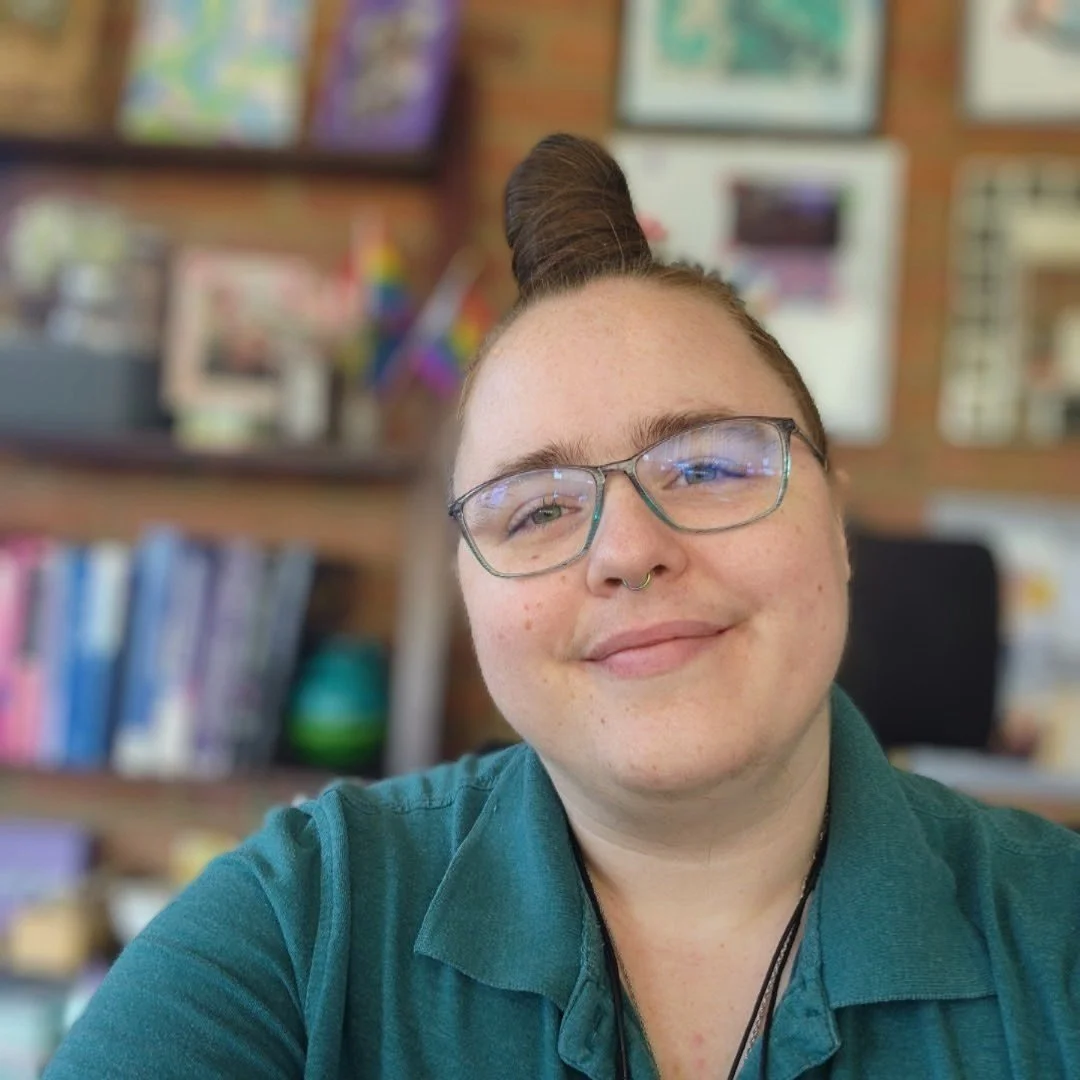
I know what it’s like to lose trust in your own mind— and I also know that reconnecting with yourself is possible.
I’m Mx. Lauren Johnson (he/him), an OCD specialist and licensed professional counselor based in Lynchburg, Virginia.
As a queer, neurodivergent human with lived experience of OCD, I get how quickly obsessive doubt makes you question yourself, your choices, and your sense of who you are.
My work is grounded in I-CBT, helping you understand OCD’s patterns and reconnect with your own judgment, experiences, and values.
I especially enjoy working with LGBTQIA+, neurodivergent, and non-monogamous folks navigating OCD, creating a space where you can feel understood and affirmed.
What Working Together Looks Like

Therapy with me is collaborative, compassionate, and grounded in curiosity rather than judgment.
Together, we’ll explore your experiences with OCD, learn how obsessive doubt shows up in your life, and create space to understand what’s happening without shame. Many of the people I work with spend a lot of time doing OCD internally— ruminating, mentally checking, or trying to figure things out. If that’s your experience, you’re in the right place.
There’s no expectation to have it all figured out before you begin. We’ll move at a pace that feels supportive and honors your capacity.
Virtual OCD Therapy in Lynchburg, VA, FL, SC, & VT

Neuroqueering Counseling Services, LLC is a virtual, private-pay practice specializing in OCD therapy for adults and teens 16+ across Lynchburg, Virginia, Florida, South Carolina, and Vermont.
Fees:
Initial Video Consultation (15 minutes): complimentary
Initial Intake Session (60 minutes): $210
Therapy Session (45–50 minutes): $160
Extended Therapy Session (75 minutes): $210
HSA, FSA, and credit cards are accepted.
Curious If We’re a Good Fit?
Finding the right therapist matters. A free 15-minute video consultation is a chance to ask questions, learn more about my approach, and see whether working together feels like the right next step.